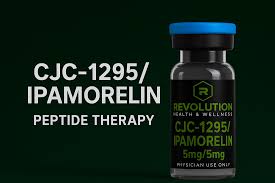
CJC-1295 No DAC Mod GRF 1-29 is a peptide research topic that continues to generate interest among laboratories, researchers, and scientific professionals studying peptide signalling and growth hormone-releasing hormone analogues.
Google Search Console is already showing Peptide World Lab for searches related to this exact topic, including variations such as CJC-1295 No DAC, CJC-1295 w/o DAC, Mod GRF 1-29, modified GRF, and modgrf.
What Is CJC-1295 No DAC Mod GRF 1-29?
CJC-1295 No DAC Mod GRF 1-29 is commonly discussed as a modified analogue related to growth hormone-releasing hormone research.
In peptide literature and supplier catalogues, the terminology can sometimes be confusing because similar names are used for closely related compounds.
Researchers may encounter terms such as:
- CJC-1295 No DAC
- CJC-1295 without DAC
- CJC-1295 w/o DAC
- Mod GRF 1-29
- Modified GRF 1-29
- Modified GRF
- ModGRF
These terms are often used in overlapping ways in commercial discussions, but researchers should always verify the exact compound identity and product specifications before using any laboratory material.
What Does “No DAC” Mean?
The phrase No DAC refers to the absence of a Drug Affinity Complex modification associated with certain CJC-1295 formulations.
This distinction matters because peptide modifications can affect properties such as:
- Molecular behaviour
- Stability
- Circulating persistence
- Experimental timing
- Binding characteristics
- Research protocol design
Researchers should therefore avoid assuming that CJC-1295 with DAC and CJC-1295 No DAC are identical research materials.
Their structures and experimental characteristics may differ.
What Is Mod GRF 1-29?
Mod GRF 1-29 is shorthand for Modified Growth Hormone Releasing Factor 1-29.
It is commonly described as a modified peptide sequence related to GHRH research.
Researchers may study this compound in controlled laboratory settings to explore:
- Receptor interactions
- Peptide signalling
- Molecular stability
- Structure-function relationships
- Endocrine signalling models
- Experimental peptide kinetics
As with other peptide compounds, findings depend heavily on the research model and methodology used.
Why Are CJC-1295 No DAC and Mod GRF 1-29 Often Linked?
One reason this topic attracts search traffic is that many users encounter the terms CJC-1295 No DAC and Mod GRF 1-29 together.
In commercial and research discussions, these names may sometimes be used interchangeably or semi-interchangeably.
That can create confusion.
Researchers should not rely solely on a product title. They should check:
- Amino-acid sequence
- Molecular identity
- Product description
- Batch information
- Supplier documentation
- Analytical testing
The most important principle is compound verification.
CJC-1295 No DAC vs CJC-1295 With DAC
A common research question is how CJC-1295 No DAC differs from CJC-1295 with DAC.
The main difference involves the presence or absence of the DAC modification.
CJC-1295 With DAC
This form includes a modification designed to alter its biological persistence and interaction characteristics.
Researchers may study it in experiments where longer-duration exposure is relevant.
CJC-1295 No DAC
This version lacks the DAC modification.
Researchers may examine it in different experimental contexts where shorter-duration signalling or different kinetic properties are being studied.
The specific interpretation depends on the laboratory design.
CJC-1295 No DAC Mod GRF 1-29 Research Applications
Laboratory researchers may investigate CJC-1295 No DAC Mod GRF 1-29 as part of broader peptide signalling studies.
Potential areas of research can include:
- Receptor activation
- Peptide signalling pathways
- Hormonal signalling models
- Molecular stability
- Structure-function relationships
- Peptide degradation
- Experimental kinetics
- Compound interactions
These are scientific research topics.
They should not be interpreted as established medical applications.
Why Terminology Matters in Peptide Research
Peptide naming can become confusing, especially when supplier terminology differs from scientific nomenclature.
A researcher might see:
CJC-1295 No DAC
on one supplier website and:
Mod GRF 1-29
on another.
If the underlying compound identity is not verified, researchers may incorrectly assume the products are identical.
For this reason, supplier transparency is essential.
Researchers should evaluate:
- Product identity
- Molecular information
- Batch details
- Purity claims
- Analytical documentation
- Storage requirements
- Research-use classification
How to Evaluate CJC-1295 No DAC Research
Researchers studying CJC-1295 No DAC Mod GRF 1-29 should evaluate published evidence carefully.
Important factors include:
Experimental Model
Was the research conducted using:
- Cells
- Animals
- Tissue models
- Molecular systems
- Humans
The type of model determines how broadly results can be interpreted.
Study Design
Controlled experiments generally provide stronger evidence than uncontrolled observations.
Sample Size
Small preliminary studies can be useful but may require confirmation through larger investigations.
Analytical Methods
Researchers should examine how the compound was measured and how outcomes were assessed.
Replication
Independent replication strengthens confidence in experimental findings.
Why Purity Matters
Purity is an important issue in CJC-1295 No DAC Mod GRF 1-29 research.
If a peptide sample contains impurities, researchers may have difficulty determining whether an observed result comes from the intended peptide or another compound.
High-quality research materials can improve:
- Experimental consistency
- Reproducibility
- Data interpretation
- Cross-study comparison
- Laboratory reliability
However, a purity percentage alone does not provide a complete picture of product quality.
Analytical Testing and Peptide Identity
Researchers should look beyond simple marketing claims such as “99% pure.”
Useful documentation may include:
- HPLC data
- Mass spectrometry results
- Certificate of Analysis
- Batch or lot number
- Product identity confirmation
- Testing date
- Storage information
Each analytical method provides different information.
HPLC Testing
High-performance liquid chromatography is commonly used to examine peptide samples.
HPLC may help assess:
- Sample composition
- Separation of components
- Purity estimates
- Presence of additional peaks
However, HPLC alone may not fully establish molecular identity.
Mass Spectrometry
Mass spectrometry can provide information about molecular mass and may support compound identification.
In peptide research, combining multiple analytical approaches can provide stronger confidence in the material being studied.
Certificate of Analysis
A Certificate of Analysis may include important batch-specific information such as:
- Product name
- Batch number
- Purity result
- Analytical method
- Test date
- Laboratory information
- Storage guidance
Researchers should confirm that the documentation corresponds to the actual product batch.
Storage of CJC-1295 No DAC Mod GRF 1-29
Storage conditions can influence peptide stability.
Researchers should follow the product-specific storage instructions provided with the laboratory material.
Factors that may affect stability include:
- Temperature
- Moisture
- Light exposure
- Repeated temperature changes
- Improper packaging
- Storage duration
Maintaining consistent laboratory handling helps preserve product integrity.
CJC-1295 No DAC Mod GRF 1-29 vs Other Peptides
Researchers may encounter comparisons between this compound and other research peptides.
However, compounds should not be treated as interchangeable merely because they are associated with peptide signalling research.
Differences can include:
- Amino-acid sequence
- Molecular modifications
- Stability
- Experimental duration
- Binding characteristics
- Research applications
Each peptide should be evaluated according to its own scientific literature.
Modified GRF and Research Terminology
Search Console also shows impressions for shorter terms such as:
- modified GRF
- modgrf
- Mod GRF
These are useful secondary keywords because researchers often use shorthand terminology.
Including these variations naturally helps Google understand the broader topic without creating separate thin pages.
That is preferable to publishing multiple nearly identical articles targeting tiny keyword variations.
Research Peptides USA and Supplier Selection
Researchers searching for research peptides USA should evaluate suppliers carefully.
For CJC-1295 No DAC Mod GRF 1-29, useful supplier characteristics include:
- Clear product identification
- Research-use labelling
- Analytical documentation
- Purity information
- Secure checkout
- Transparent shipping
- Support availability
- Clear return policy
- Product storage guidance
Supplier transparency can reduce uncertainty when sourcing laboratory materials.
Buying CJC-1295 No DAC for Research
Google Search Console is already showing the query:
buy CJC-1295 No-DAC Mod GRF 1-29
This is valuable because it shows commercial intent.
For SEO, however, the product page should primarily target:
- buy CJC-1295 No DAC
- CJC-1295 No DAC for sale
- Mod GRF 1-29 for sale
- CJC-1295 No DAC online
This blog should remain focused on informational intent.
That avoids keyword cannibalization.
Researchers ready to browse available products can visit the Peptide World Lab Store or the relevant CJC-1295 No DAC / Mod GRF 1-29 product page.
How to Find Reliable Scientific Information
Researchers should use independent scientific sources in addition to supplier information.
The National Library of Medicine provides access to biomedical literature resources, including PubMed.
When reviewing studies, check:
- Publication source
- Authors
- Experimental model
- Sample size
- Methods
- Controls
- Results
- Limitations
- References
This helps distinguish credible research from unsupported claims.
Research Use Only
All products discussed on Peptide World Lab are intended strictly for laboratory and scientific research purposes.
They are not intended for:
- Human consumption
- Self-administration
- Medical treatment
- Diagnosis
- Disease prevention
- Therapeutic use
Website information is educational and should not be treated as medical advice.
Related Blogs Posts:
Chonluten peptide research guide
Related Product:
CJC-1295 No DAC Mod GRF 1-29 research peptide
Important Links:
Final Thoughts
CJC-1295 No DAC Mod GRF 1-29 represents an important topic within peptide signalling research and is already generating relevant impressions for Peptide World Lab in Google Search Console.
The biggest challenge for researchers is often terminology.
Terms such as CJC-1295 No DAC, CJC-1295 w/o DAC, Mod GRF 1-29, modified GRF, and modgrf can appear across different scientific and commercial resources.
Researchers should therefore verify compound identity rather than relying solely on product titles.
Product purity, analytical documentation, batch traceability, storage conditions, and supplier transparency are all important considerations.
Frequently Asked Questions:
What is CJC-1295 No DAC Mod GRF 1-29?
CJC-1295 No DAC Mod GRF 1-29 is commonly discussed as a modified peptide analogue used in laboratory research involving growth hormone-releasing hormone signalling and related molecular processes.
Is CJC-1295 No DAC the same as Mod GRF 1-29?
These terms are often used in closely related or overlapping ways in commercial peptide discussions. Researchers should verify the exact amino-acid sequence, product identity, and analytical documentation rather than relying only on naming conventions.
What does No DAC mean?
No DAC indicates that the peptide does not include the Drug Affinity Complex modification associated with certain CJC-1295 variants.
Why is purity important for Mod GRF 1-29 research?
Purity and identity can affect experimental consistency and data interpretation. Researchers should evaluate analytical documentation, batch information, and storage conditions.
Where can researchers find CJC-1295 No DAC for laboratory research?
Researchers should use specialist research suppliers and review product identity, purity information, analytical testing, research-use labelling, and supplier policies before purchasing laboratory materials.